Gold Jewellery Buying Guide
Before you spend on gold jewellery, understand what you are actually buying. This gold jewellery buying guide covers purity levels, hallmarks, weight, pricing breakdowns, and exactly what to verify before handing over your money so you buy with confidence, not guesswork.

Why This Guide Matters
Buying Gold Jewellery Without This Knowledge Is a Risk
Gold jewellery is not a minor purchase for most people. Whether you are buying a gift, an investment piece, or something personal, the decisions you make at the point of purchase about purity, weight, hallmarks, and pricing determine how much value you are actually getting for your money.
This gold jewellery buying guide exists because the retail jewellery market is not always straightforward. Making charges can be high. Karat levels can vary substantially between pieces that look similar. Gemstone weight is sometimes included in total weight figures without clear disclosure. And the spot price of gold is not the same number as what you pay in a shop.
Understanding the basics before you buy from what karat levels mean to how to read a hallmark takes the guesswork out of the transaction and puts you in a better position. This guide covers everything you need, from purity to pricing, in clear practical terms.
9K–24K
10
7
Understanding Gold Purity Levels
How different karat levels compare in terms of purity, durability, and typical jewellery applications. Part of any complete gold jewellery buying guide.
Gold Type
- 24K — Pure Gold
- 22K — High Purity
- 18K — Premium Wearable
- 14K — Durable Everyday
- 10K — Legal Minimum (US)
- 9K — UK Common
Approx. Purity
- 99.9%
- 91.6%
- 75.0%
- 58.5%
- 41.7%
- 37.5%
Common Fineness Mark
- 999
- 916
- 750
- 585
- 417
- 375
Unique Jewelry Assessment
- Very high purity
- Common in Asian gold jewellery
- Most popular for fine jewellery
- Most common in US jewellery
- Guaranteed
- Full lab test
- Always returned
Simple 4-Step Process
How It Works
Simple 4-Step Process
How It Works
The karat determines what fraction of the piece is actual gold. This is the most important single factor in the Gold Jewellery Buying Guide it directly affects both value and durability.
XRF Testing Confirms Purity
Hallmarks Are a Starting Point Not a Guarantee
Professional Testing Removes Uncertainty
Weight + Purity = Gold Content
Hallmark & Purity Guide
How to Check Gold Purity Before You Buy
A hallmark is the most accessible indicator of gold purity but it is not the only check a careful buyer should rely on. This section of the gold jewellery buying guide covers what hallmarks tell you, and where their limits are.
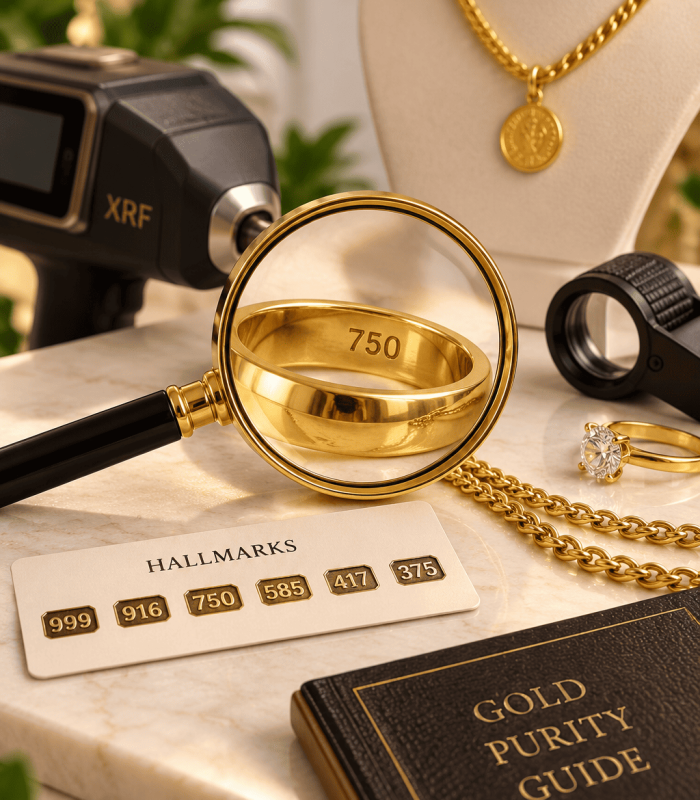
Karat stamps and fineness numbers are stamped directly into the metal of a piece — inside a ring band, on a pendant bail, on a chain clasp. “750” means 18K (75% gold). “585” means 14K. “375” means 9K. Look for these on any piece before purchasing. If the seller cannot show you the stamp, ask them to find it.
Visual inspection alone is not enough. Gold-coloured jewellery is not necessarily gold. White gold, yellow gold, and gold-plated items can look similar in a display case. Gold-plated pieces have a very thin layer of gold over a base metal — they have minimal precious metal value and are not assessed the same way as solid gold in any legitimate gold jewellery valuation.
- Look for fineness marks 999, 916, 750, 585, 417, 375
- Confirm the hallmark position inside ring bands, on clasps, on bails
- Never assume purity from colour or weight alone
- Gold-plated items will not carry the same marks as solid gold
- Worn or obscured hallmarks are a reason to ask questions, not assume the best
- Professional testing can confirm purity on any piece without damage
Common Errors
7 Gold Jewellery Buying Mistakes to Avoid
These are the most common errors buyers make and understanding them is central to any practical gold jewellery buying guide.

Where to Buy Gold Jewellery
What to Look For in a Gold Jewellery Seller
This gold jewellery buying guide is not about recommending specific sellers it is about giving you the criteria to evaluate any seller you encounter. These are the standards a transparent, reputable jewellery seller should meet.
In Little Rock and across Arkansas, buyers have multiple options from established local jewellers to online retailers to private sellers. The same evaluation criteria apply regardless of channel.
- Transparent pricing can explain the full price breakdown including making charges
- Clear purity information hallmarks visible and confirmed, karat stated without ambiguity
- Professional documentation receipt showing karat, weight, charges, and total separately
- Willing to confirm weight and separate gold weight from stone weight where applicable
- Clear return and exchange policy stated before purchase, not revealed afterward
- Honest on resale does not imply that your purchase price is guaranteed to hold as resale value
- Answers questions without pressure a good seller welcomes questions rather than redirecting them
- Established local presence a physical address and local reputation you can verify
At Unique Jewelry in Little Rock, we evaluate gold jewellery for buyers and sellers using the same transparent methodology confirmed purity, calibrated weighing, and written breakdowns. See how we value gold jewellery →
Frequently Asked Questions
Common questions about the Gold Jewellery Buying Guide from customers in Little Rock and across Arkansas. Have a specific question? Call us at (501) 859-1282 and we’ll be happy to help.
The answer depends on how the piece will be worn. 18K (75% gold) is the most widely used karat for fine jewellery globally it balances purity, colour, and durability well. For everyday active wear, 14K (58.5%) is more durable and more affordable. 22K and 24K are better suited to collectible, investment, or traditional pieces rather than daily wear. This Gold Jewellery Buying Guide recommends choosing karat based on intended use, not just gold content alone.
Start with the hallmark a fineness stamp (750 for 18K, 585 for 14K) stamped into the metal in a standard location. This gives an initial indication. However, hallmarks can be worn, incorrectly positioned, or occasionally inaccurate. For a definitive answer, professional XRF testing confirms exact purity without damaging the piece. If you are purchasing a high-value item, particularly second-hand, having it professionally tested beforehand is a reasonable step.
The essential checks from this Gold Jewellery Buying Guide: verify the karat and hallmark, confirm the net gold weight in grams (separate from stone weight), understand what making charges are being added, check the return policy, and get a receipt that itemizes all of these components separately. These checks apply whether you are buying from a jeweller, online retailer, or private seller.
Generally, no. 24K gold is 99.9% pure, which makes it very soft and malleable susceptible to scratching, bending, and deforming with daily wear and normal contact. It is most appropriate for gold bullion bars and coins where wearability is not the priority. For jewellery intended to be worn regularly, 18K or 14K provides significantly better durability without sacrificing too much purity.
A hallmark is a purity stamp applied to a precious metal item to indicate its fineness. For gold, common hallmarks include 999 (24K), 916 (22K), 750 (18K), 585 (14K), 417 (10K), and 375 (9K). The number represents gold parts per thousand “750” means 750 parts per 1,000 are gold, i.e. 75%. Hallmarks are found in standard positions depending on the jewellery type, and their presence is an important first step in any gold jewellery buying guide checklist.
Second-hand gold jewellery can represent good value precisely because the retail markup and making charges built into the original price are not fully carried into the resale market. The gold content value remains. However, second-hand purchases warrant extra care — hallmarks should be verified, professional purity testing is advisable for high-value pieces, and condition should be examined carefully for structural issues. Apply this gold jewellery buying guide’s checklist with particular thoroughness for second-hand purchases.
When you buy gold jewellery at retail, you pay the gold content value plus making charges plus the seller’s retail margin. When you sell, a buyer pays primarily for the gold content at today’s spot price making charges and retail markup are not recovered. This is normal and predictable, not a failing of the buyer or seller. Understanding this difference is one of the most practical insights any Gold Jewellery Buying Guide can provide. See how we value gold jewellery for the full methodology.