How the Silver Spot Price Shapes Your Payout
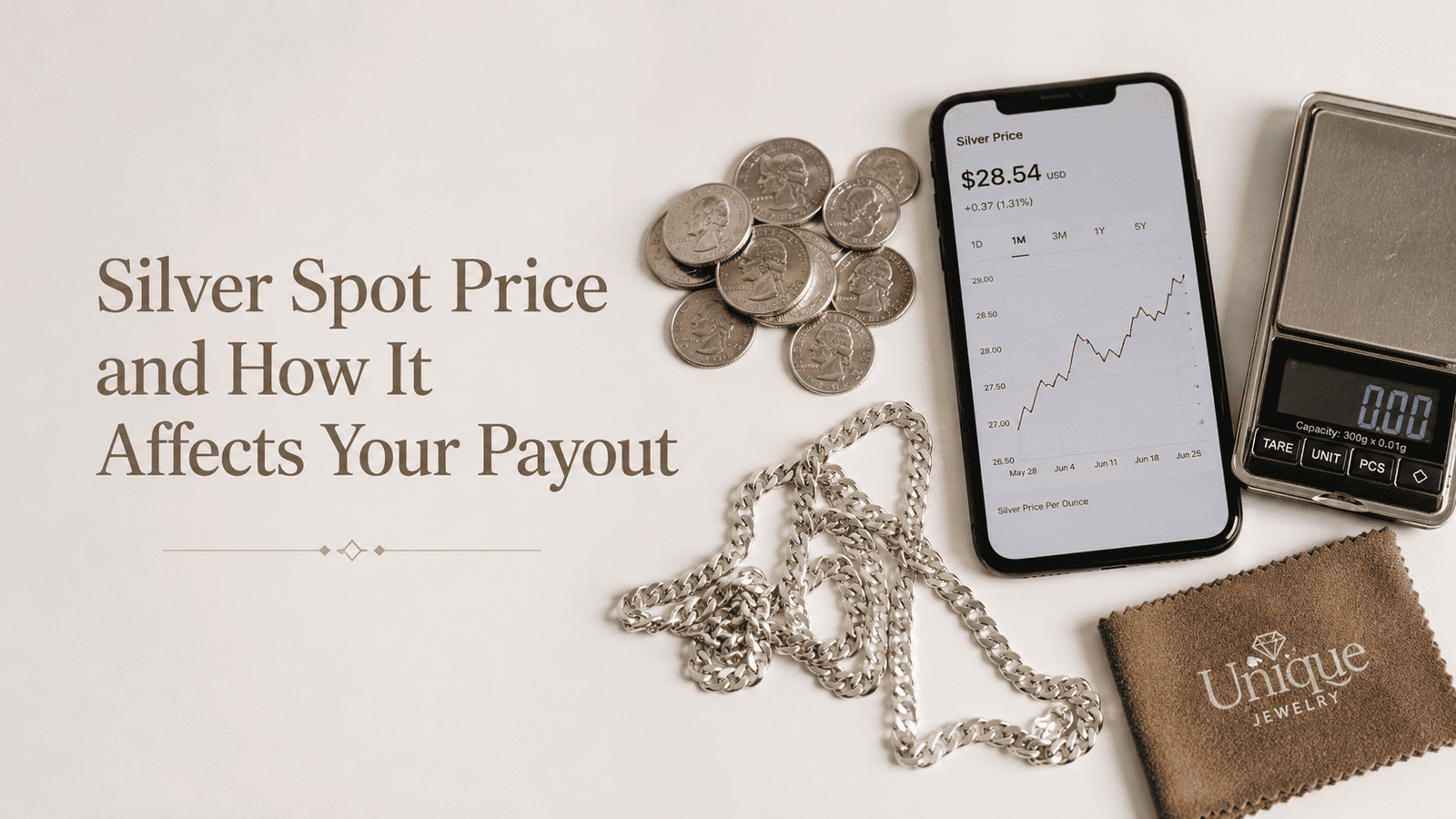
The silver spot price is the number that decides what your silver is worth on any given day. It sets the baseline for every offer a buyer makes, whether you are selling a flatware set, a handful of coins, or a box of scrap.
Most people who sell silver have never checked the spot price before walking into a shop. They hear an offer, have nothing to compare it against, and take it on faith. That gap between the actual market rate and what someone gets paid is where confusion, and sometimes a poor deal, creeps in.
This guide breaks down what that rate is, how it moves, and exactly how it turns into the cash you receive. Knowing the connection puts you in a stronger position before you sell anything.
Quick Answer:
The silver spot price is the live market rate for one troy ounce of silver. Your payout is a percentage of that rate, adjusted for the purity and weight of your items. Check the spot price before you sell so you can judge any offer against the real number.
What the Spot Price of Silver Today Actually Means
The spot price is the going rate to buy or sell one troy ounce of silver right now, settled immediately rather than at some future date. It is quoted in US dollars per troy ounce, and one troy ounce equals about 31.1 grams.
This number is the foundation for nearly everything in the silver market. Bullion dealers, jewelers, and refiners all price their silver against it. When you want to know the spot price of silver today, a live source updates it through the trading day.
How the Spot Price Is Calculated
- It reflects the most recent price silver traded at on global futures markets.
- It updates continuously during market hours, not once a day.
- It applies to pure silver, so anything less than 99.9 percent gets adjusted down.
You can track the live silver price on a live chart before you sell, which gives you a baseline to work from.
How Silver Spot Price Now Changes Throughout the Day
The silver spot price now is not a fixed daily figure. It moves constantly while markets are open, reacting to trading activity, currency shifts, and economic news.
A price you check in the morning can differ by the afternoon. That is normal, and it is why a fair buyer prices your silver against the rate at the moment of the offer rather than a number set last week. A clear explanation of what spot price means in the metals market covers why this figure shifts the way it does.
Why Your Payout Is Never Exactly the Spot Price
Here is the part that surprises people. You will not be paid the full spot price for your items, and that is not a sign of a bad buyer. It is how the business works.
The spot price applies to pure silver in bulk. Your jewelry or flatware is rarely pure, and a buyer takes a margin to cover testing, refining, and running the shop.
The Three Numbers Behind Every Silver Offer
| Factor | What It Means |
| Purity | Sterling silver is 92.5 percent, fine silver is 99.9 percent |
| Weight | Measured in grams or troy ounces |
| Buyer margin | The share of spot value the buyer keeps |
A buyer multiplies the spot price by your item’s purity and weight, then applies the margin. Seeing how we calculate a silver offer shows exactly where each of these numbers lands in a real quote.
What Moves the Spot Price of Silver Coins Like Eagles
The spot price of silver responds to forces well beyond jewelry. Silver is both an industrial metal and an investment, so its price answers to two different kinds of demand at once.
When factories need more silver for electronics and solar panels, demand rises. When investors buy silver during uncertain times, demand rises again. Supply from mining sits on the other side of that equation.
- Industrial demand from electronics, solar, and manufacturing
- Investment demand during economic uncertainty
- Mining supply and refining output
For coins specifically, a small premium sits on top of the metal value. A breakdown of the factors affecting American Eagle silver coin prices explains why a coin often costs a little more than its raw silver content.
Spot Price vs. What You Actually Get Paid
Putting real numbers to it makes the spot price and payout connection clear.
A Simple Payout Example
| Item | Value |
| Spot price (per troy ounce) | $30 |
| Sterling silver sold | 100 grams |
| Pure silver content (92.5%) | 92.5 grams, about 2.97 oz |
| Melt value at spot | About $89 |
| Payout at a fair margin | Roughly $67 to $76 |
The melt value comes straight from the spot price and purity. The payout is a share of that, set by the buyer’s margin. When you sell silver at a fair spot-based price, the buyer shows you each of these figures rather than naming a single number with no breakdown.
The Same Spot-Price Logic Applies to Gold
Silver is not unique here. Gold works the same way, priced on its own spot rate, purity, and weight. If you have gold in the mix, scrap gold priced the same way follows the identical formula, just against the gold market instead of silver.
Selling Silver and Gold Together at Fair Spot-Based Prices
Plenty of people bring both metals at once, an old silver set alongside a few gold pieces. A buyer who handles both tests each separately and prices each against its own spot rate.
That saves you a second trip and keeps the pricing transparent across the whole lot. Comparing options for selling gold and silver for cash in Little Rock helps you find a buyer who values both metals fairly in one visit.
Why a Licensed Buyer Matters When Spot Price Is on the Line
The spot price is public, but the margin a buyer takes is not fixed. That makes who you sell to matter as much as the spot rate itself.
A licensed buyer tests your silver openly, shows the spot price they are using, and explains the margin. Working with a licensed, trusted buyer protects you from vague offers that hide how the number was reached.
Conclusion
The silver spot price is the number everything else is built on. It sets the market value of your silver, and your payout is a clear, calculable share of it once purity, weight, and the buyer’s margin are applied. Knowing that connection means no offer can surprise you.
The smartest move before selling is simple. Check the spot price, understand that your payout sits a fair margin below it, and choose a buyer who shows you the math instead of hiding it.
If you are in central Arkansas and ready to sell, the team at silver buyers near me in Little Rock prices every piece against the live spot rate with open testing. To ask about a specific item or confirm current rates before you visit, contact our team. We will walk you through it.
Frequently Asked Questions About Silver Pricing
What does spot price mean for silver?
The spot price is the live market rate for one troy ounce of pure silver, settled immediately. It sets the baseline value for any silver you buy or sell, before purity and buyer margin are factored in.
How much over the spot should I pay for silver?
When buying physical silver, expect to pay a premium over spot that covers minting and dealer costs. Coins and small bars carry higher premiums than large bars, so the exact amount depends on the product.
How much under spot should I sell silver for?
When selling, expect to receive a percentage below spot, since the buyer takes a margin. A fair offer on sterling usually lands well within reach of the melt value once purity and weight are accounted for.
Where can I buy silver at spot price?
Buying exactly at the spot is rare since dealers add a premium to cover their costs. The closest you get to a spot is usually on large bullion bars, where the premium is smallest relative to the metal value.
How to spot fake silver?
Check the hallmark for a “925” or “Sterling” stamp, try a magnet since real silver is not magnetic, and look at weight and wear. A jeweler can confirm authenticity with a quick acid or electronic test.