
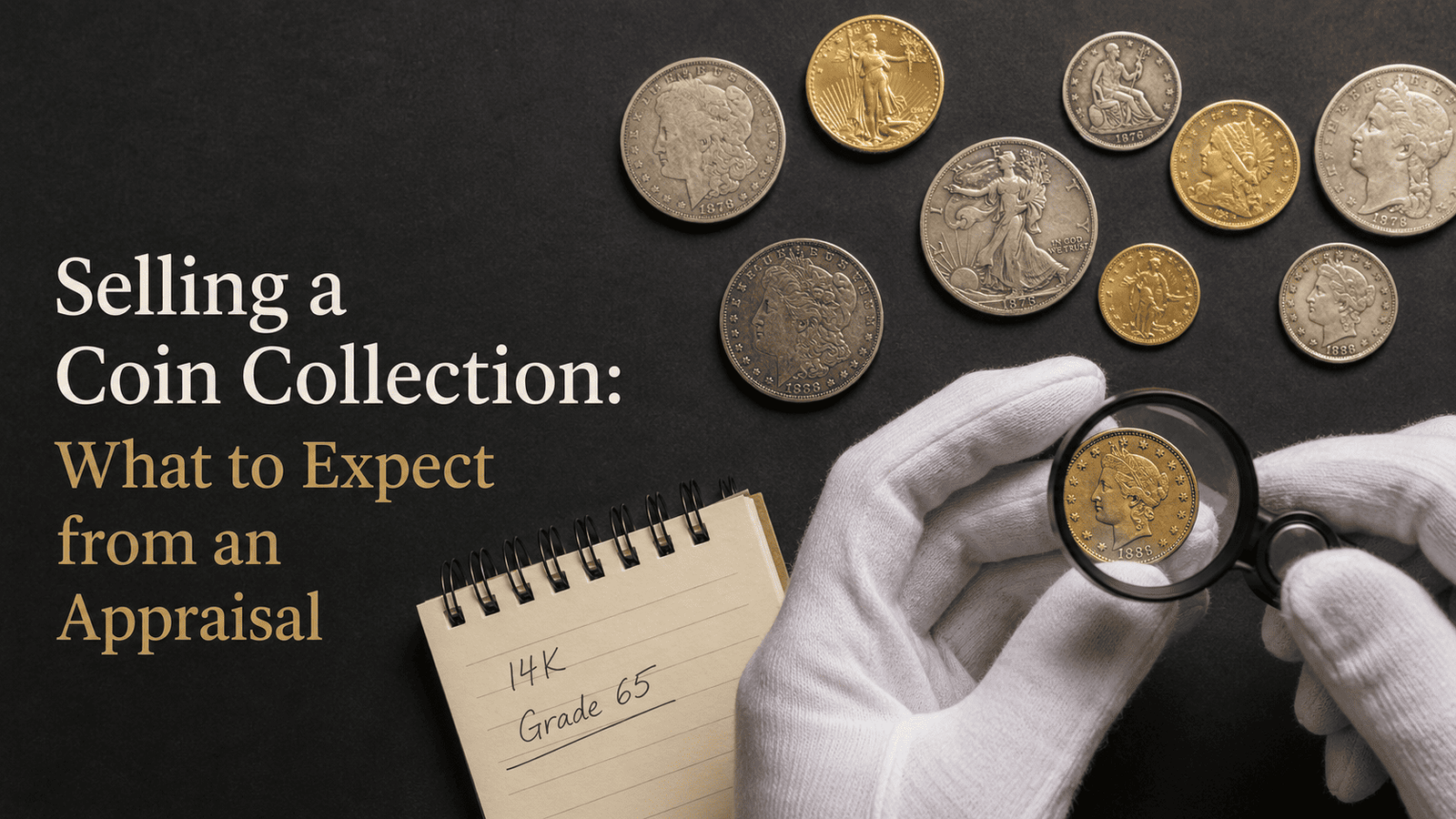
What a Coin Appraisal Really Tells You Before You Sell
Most people who inherit or build a coin collection have no real idea what it’s worth. They see old coins, assume some value, and either overestimate wildly or sell the whole lot for pocket change. Both mistakes cost money.
An appraisal fixes that. It’s the step between “I have some coins” and “I know what I’m holding.” Going in without one is guessing, and guessing favors the buyer, not you. Here’s what an appraisal involves, what it costs, and how to use it to sell for a fair price.
Quick Summary
An appraisal tells you what your coins are actually worth before you sell, separating rare pieces from plain bullion. Expect the appraiser to check each coin’s date, mint mark, grade, and metal content, then give you a value range. Selling a coin collection without one risks handing away rare coins for their melt value.
Why an Appraisal Comes First
A coin collection is rarely uniform. A single box can hold common bullion worth its metal, a few scarce dates worth hundreds each, and one or two pieces worth more than everything else combined. A look at the world’s most valuable collectors coins shows how wide that range can run.
A buyer purchasing the whole lot as bulk has no reason to tell you which is which. That’s the trap. Without knowing your collection’s makeup, you can’t tell a fair offer from a lowball.
An appraisal breaks the collection down piece by piece. It tells you what’s rare, what’s ordinary, and what a realistic price range looks like. That knowledge shifts the power back to you when it’s time to sell.
What Happens During a Coin Appraisal
A proper appraisal follows a clear process. Knowing the steps helps you spot a thorough appraiser from a rushed one.
Sorting. The appraiser separates bullion from collectible coins, and foreign from domestic. This first pass groups the collection by type.
Identification. Each coin gets checked for date, mint mark, and variety. A 1909-S penny and a 1909 penny look nearly identical but sit worlds apart in value. This step catches those differences.
Grading. Condition gets scored on the 1 to 70 Sheldon scale. For collectible coins, grade drives price more than almost anything else. A guide to coin appraisals and where to get coins appraised covers how professionals approach this step.
Authentication. The appraiser confirms coins are genuine, not counterfeit or altered. High-value coins may be recommended for third-party certification.
Valuation. Finally, the appraiser assigns a value or range to each significant piece, and a bulk figure to the common material.
Appraisal Value vs. What a Buyer Pays
Here’s a distinction that trips up sellers. An appraisal value is not always what you’ll be paid.
Appraisals come in a few types, and each serves a different purpose:
- Fair market value. What the coin would sell for between a willing buyer and seller. Closest to what you’ll actually get.
- Retail replacement value. What you’d pay to buy the coin from a dealer. Used for insurance, higher than what a buyer pays you.
- Wholesale or melt value. The floor, what the metal alone is worth or what a dealer pays to resell.
For selling, fair market value is the number that matters. An insurance appraisal showing retail replacement value will look higher than any offer you get, and that gap is normal, not a ripoff. The American Numismatic Association’s ten rules for collectors stress understanding which value you’re being quoted.
What a Coin Appraisal Costs
Appraisal pricing varies, and knowing the models helps you avoid overpaying.
| Appraisal Type | Typical Cost | Best For |
| Verbal / walk-in estimate | Free to $50 | Quick idea of value |
| Per-coin written appraisal | $10 to $50 per coin | A few high-value pieces |
| Hourly | $50 to $200/hour | Mid-size collections |
| Percentage of value | 1 to 5% of total | Large or valuable estates |
Watch for one conflict of interest. A buyer offering a “free appraisal” who then wants to buy your collection has a reason to value it low. That doesn’t make every free appraisal dishonest, but it’s why a second opinion matters on anything valuable. For a large or inherited collection, paying an independent appraiser with no stake in buying is often worth the cost.
Preparing Your Collection for Appraisal
A little prep makes the appraisal faster, cheaper, and more accurate.
- Do not clean the coins. Cleaning destroys collector value. An appraiser wants to see the original surface. This is the single most important rule.
- Keep coins in their holders. If coins are already in flips, tubes, or slabs, leave them there.
- Organize what you can. Group by type or country if it’s obvious, but don’t force it.
- Gather paperwork. Old receipts, prior appraisals, or inventory lists help establish provenance.
- Note anything you know. If a relative mentioned a specific valuable coin, tell the appraiser.
A coin collecting guide for beginners covers how dates and mint marks affect value, which helps you follow the appraiser’s reasoning.
Basic grounding from a beginner’s guide to coin collecting helps you speak the appraiser’s language and follow their reasoning.
From Appraisal to Sale
Once you know what your collection holds, selling a coin collection becomes a matter of matching each part to the right buyer.
Bullion and common coins sell to any fair precious metals buyer at a share of spot price. The appraisal confirms the metal content, and you shop on price. Standard pieces like gold American Eagles trade close to their metal value with no need for a specialist.
Rare and collectible coins are different. These need a numismatic buyer who recognizes the premium your appraisal identified. Handing a rare coin to a buyer who only pays melt value wastes the entire appraisal. Comparing local coin buyers near me helps you find someone who handles both bullion and collectible pieces.
For collections with real value, consider getting more than one offer. An appraisal gives you the baseline; competing offers confirm you’re getting a fair share of it. Local options for selling gold and silver for cash in Little Rock let you compare on the spot.
Reporting and Tax Basics
Selling a large collection can carry tax and reporting considerations, especially for higher-value sales.
Dealers must report certain cash transactions over $10,000 to the government, and some bullion sales trigger dealer reporting requirements. Guidance on reporting cash transactions explains the threshold that applies to cash payments.
On the tax side, profit from selling coins can count as a capital gain. Collectibles, including coins, may be taxed at a different rate than ordinary investments. This is general information, not tax advice, so a tax professional is the right call for a large or valuable sale. Knowing the rules before you sell beats being surprised after.
Conclusion
An appraisal is the difference between selling a coin collection blind and selling it with your eyes open. It tells you what’s rare, what’s common, and what a fair price looks like for each piece, so no buyer can quietly pay you melt value for a coin worth ten times that.
The process is straightforward. A good appraiser sorts, identifies, grades, authenticates, and values your collection, then hands you a number you can actually use. Skip the cleaning, keep coins in their holders, and get an independent opinion on anything valuable.
If you’re in central Arkansas and want your collection looked at, Unique Jewelry in Little Rock appraises and buys both bullion and collectible coins. You can reach the shop at +1 501-859-1282 to ask about your collection before bringing it in.
Frequently Asked Questions
How much does gold sell for?
Gold sells at its spot price, which changes daily. For coins, you get a share of that based on the metal content, or more if the coin has collector value. An appraisal tells you which applies to each piece in your collection.
How much gold can I sell without reporting?
Dealers must report certain cash transactions over $10,000, and specific bullion sales trigger separate dealer reporting rules. The exact thresholds depend on the coin type and payment method. For a large sale, confirm the current rules with the buyer and a tax professional.
Is it a good time to sell gold?
That depends on the spot price and your reasons for selling. Gold tends to climb during economic uncertainty. For collectible coins, timing matters less, since their value follows collector demand rather than the daily metal price.
How do you sell gold coins?
Get them appraised first to separate bullion from collectible pieces. Sell bullion to a fair metals buyer at a share of spot. Sell rare coins to a numismatic specialist who recognizes their premium. Matching each coin to the right buyer protects your value.
Where can I sell my gold coins for the best price?
The best price comes from matching the coin to the right buyer. Bullion goes to any fair metals buyer; rare coins need a numismatic specialist. Get an appraisal, then compare offers from buyers who handle collectible coins, not just metal.
How do you buy and sell gold?
Buying and selling gold starts with knowing the spot price and the premium on any given coin or bar. Buy from reputable dealers, sell to buyers who price transparently, and always confirm you’re being quoted fair market value rather than a lowball offer.