Estate Jewelry Little Rock: Why Selling Inherited Pieces Feels Different
Selling Estate jewelry isn’t like selling a broken chain or a spare ring. Estate Jewelry Little Rock sellers are usually holding something with history — a grandmother’s brooch, a great-aunt’s cocktail ring, a jewelry box passed down after a funeral. The emotional weight is real, and so is the risk of being taken advantage of.
Inherited jewelry buyers see a wide range of sellers: people who know exactly what they have, and people who have no idea whether a piece is worth $50 or $5,000. That gap in knowledge is exactly where dishonest buyers make their money. This guide explains how to sell estate jewelry Little Rock the right way — how appraisals work, what separates an honest offer from a lowball one, and how to choose a buyer you can actually trust.
What Counts as Estate Jewelry Little Rock?
Estate jewelry simply means previously owned jewelry—it doesn’t have to be centuries old. Whether you’re buying or selling Estate Jewelry Little Rock, it typically falls into four categories:
Antique jewelry — pieces roughly 100+ years old, often Victorian, Edwardian, or Art Deco.
Vintage jewelry — pieces roughly 20–100 years old, reflecting mid-century or retro design.
Heirloom jewelry — any piece passed down through a family, regardless of age.
Inherited jewelry — jewelry received through an estate, will, or family transfer, sometimes with no documentation at all.
A trusted old jewelry buyer near me should be equipped to evaluate all four categories—not just melt-value scrap gold, but pieces that may carry historical, artistic, or collector value beyond their metal content.
Estate Jewelry vs. Modern Jewelry: Why Valuation Differs
Modern gold jewelry is usually valued on one factor: melt value — karat purity times weight times spot price. Estate jewelry Little Rock pieces often carry a second, separate layer of value: craftsmanship and rarity.
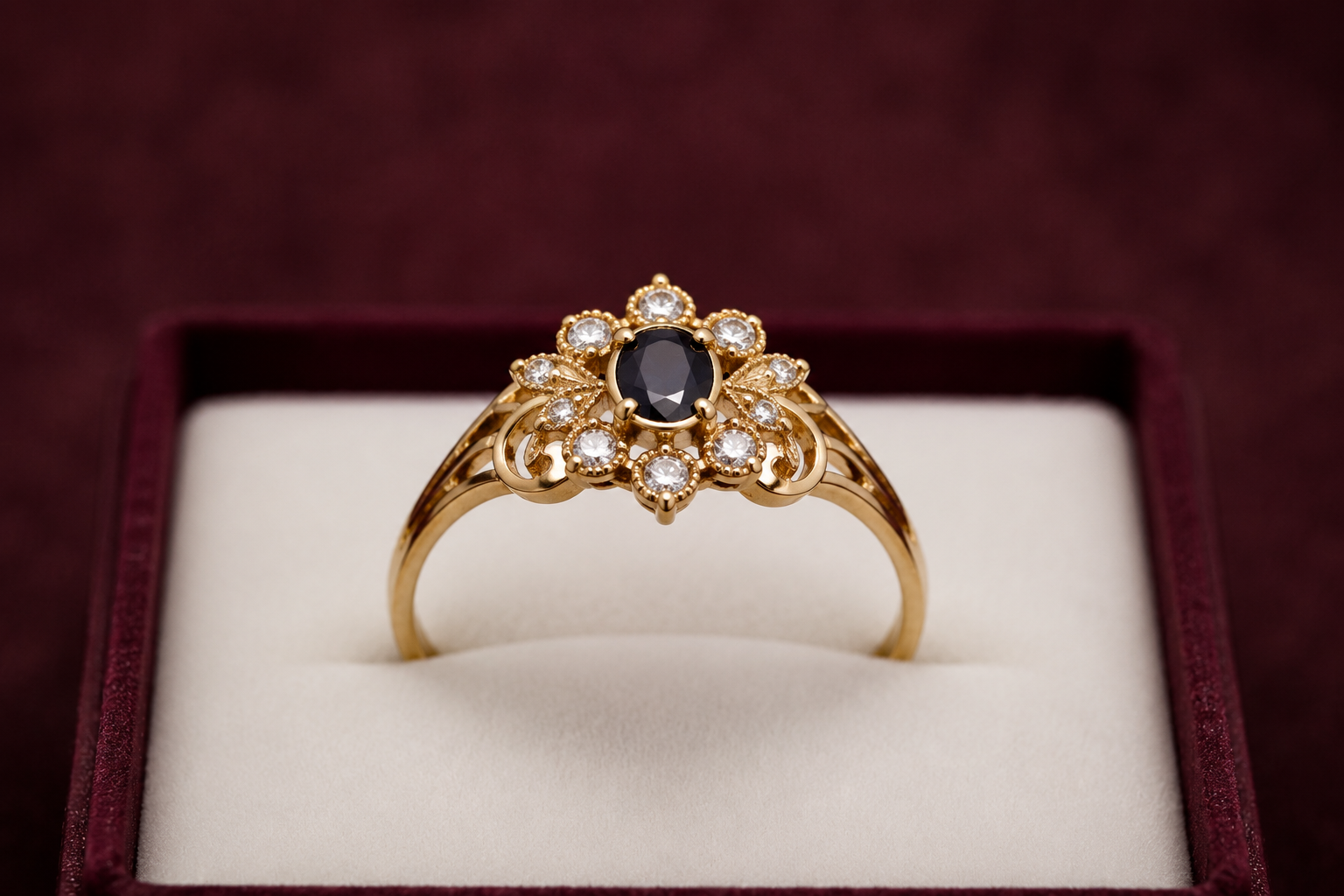
Jewelry design has evolved through distinct eras, each with recognizable techniques, settings, and metalwork. A ring from the 1920s might use a filigree setting no modern jeweler replicates. A piece with hand-engraving or a maker’s mark might be worth significantly more than its gold content alone.
This is why a vintage jewelry appraisal Little Rock service needs two kinds of expertise: standard metal testing, and a trained eye for design era, condition, and craftsmanship. A buyer who only weighs and tests purity — without ever looking at the piece as a whole — is likely to miss (or ignore) additional value.
How to Sell Estate Jewelry Little Rock: The Honest Process
A transparent estate jewelry appraisal Arkansas process should look like this:
| Step | What Happens | Time |
| Visual inspection | Design era, condition, hallmark check | 5–10 min |
| Hallmark & purity testing | Karat confirmed via acid test or XRF scanner | 2–5 min |
| Craftsmanship review | Setting style, stone cuts, maker’s marks noted | 5–10 min |
| Weight measurement | Piece weighed on calibrated scale | 1–2 min |
| Value comparison | Melt value vs. potential collector/design value compared | 5 min |
| Offer presented | Final offer explained, with reasoning shown | 5 min |
The full process typically takes 20–30 minutes for a single estate piece, longer for a full collection. If a buyer skips straight to a number without walking through these steps, that’s a sign to keep shopping around.
Red Flags When Selling Estate Jewelry
Because estate and antique pieces are harder for the average seller to independently value, this category attracts more dishonest buyers than standard scrap gold. The warning signs closely mirror the tactics seen in gold investment scams — high pressure, vague reasoning, no documentation.
Watch for these specific red flags:
1. An offer with no explanation. If a buyer names a price without showing you the weight, the karat test, or how they arrived at the number, you have no way to verify it’s fair.
2. Pressure to sell immediately. Estate jewelry often carries sentimental value. A dishonest buyer will use urgency (“this offer is only good today”) to stop you from getting a second opinion.
3. No mention of design or craftsmanship value. If every offer treats every piece as pure scrap — regardless of age, maker, or condition — you may be leaving money on the table.
4. Refusal to itemize a collection. If you’re selling multiple pieces, a legitimate buyer prices each one individually. A single lump-sum offer for a whole box makes it impossible to know what any one piece was actually worth.
5. No license or credentials on request. As outlined in Find Bullion Prices’ breakdown of common scam patterns and Noble Gold Investments’ documentation of recent scam trends, legitimate precious metals buyers are licensed and willing to prove it. If a buyer avoids the question, walk away.
Estate Jewelry Cash Offer: What’s Reasonable
Because estate jewelry can carry design or collector value on top of melt value, cash offers vary more than standard scrap gold. As a general guide:
| Item Type | Valuation Basis |
| Plain gold band, no stones | Melt value only |
| Victorian/Edwardian ring, hallmarked | Melt value + design premium |
| Signed piece (recognized maker) | Melt value + collector premium |
| Gemstone estate ring | Metal value + independently assessed stone value |
| Damaged/incomplete piece | Melt value, condition-adjusted |
A fair estate jewelry cash offer should always separate these components so you understand exactly what you’re being paid for.
Antique Jewelry Buyer Arkansas: What Licensing Actually Means
Arkansas regulates the purchase of precious metals and secondhand goods, including estate and antique jewelry. A legitimate antique jewelry buyer Arkansas sellers can trust will:
- Request valid government-issued ID before any purchase
- Maintain purchase records as required by state law
- Operate from a fixed, verifiable business location
- Provide a clear receipt detailing what was purchased and for how much
If a buyer avoids any of these basics — especially ID requirements or a physical address — that’s not a shortcut, it’s a warning sign.
Selling a Full Collection: What to Expect
Many estate jewelry Little Rock sellers aren’t bringing in a single ring — they’re bringing in an entire inherited collection: a jewelry box, a safe deposit box, decades of accumulated pieces with no documentation. Here’s how a fair process handles that scenario:
- Each piece is separated by metal type, karat, and condition
- Each piece is tested individually — no lumping high-value pieces in with scrap to average down the price
- Coins, watches, and loose stones are valued separately using their own criteria (see our gold coins guide for coin-specific factors)
- You receive an itemized offer for the full collection, piece by piece, so you can accept, decline, or negotiate individual items
This transparency matters most with large collections, where it’s easiest for a dishonest buyer to bury an underpriced item in a bulk number.
Reading Hallmarks on Estate and Antique Jewelry
Hallmarks are one of the most reliable ways to verify a piece’s age, purity, and origin before you ever get an offer. Older American, British, and European pieces used different hallmark systems, and foreign estate pieces are common in inherited collections.
Before your visit, it can help to review how to identify antique gold hallmarks and, if a piece may have foreign origins, foreign gold hallmarks and how to identify them. Even a basic understanding of what’s stamped inside a ring or on a clasp helps you follow along when a buyer explains their testing.
Vintage Gold Jewelry Buyer: Melt Value Isn’t the Whole Story
A vintage gold jewelry buyer worth working with understands that “vintage” and “antique” are not simply older versions of modern jewelry — construction methods, alloy compositions, and design conventions changed significantly across eras. A ring cast in the 1940s may have a different gold alloy composition than a ring made today, even at the same stated karat.
This is part of why a documented valuation process matters even more with estate pieces than with modern jewelry — the testing has to confirm actual purity rather than assuming it based on age or appearance alone.
Choosing a Trusted Buyer for Heirloom Jewelry Sale Little Rock
When you’re ready to move forward with a heirloom jewelry sale Little Rock, use this checklist:
- Buyer explains their process before naming a price
- Each piece in a collection is tested and priced individually
- Design, era, and craftsmanship are considered — not just melt value
- Licensing and ID requirements are met without hesitation
- No pressure to decide on the spot
- Itemized receipt provided for any completed sale
At Unique Jewelry, Park Plaza, estate and antique pieces are evaluated using exactly this process — full transparency, piece-by-piece pricing, and no pressure to sell. Whether you’re bringing in a single antique ring or an entire inherited collection, see our sell your gold page for the full walk-in process, or check our FAQ for common questions before your visit.
Key Takeaways — Estate Jewelry Little Rock
- Estate jewelry Little Rock includes antique, vintage, heirloom, and inherited pieces — not just modern scrap gold
- Fair valuation considers both melt value and potential design or collector value
- Red flags mirror common precious metals scams: no explanation, pressure to sell fast, refusal to itemize
- A legitimate antique jewelry buyer Arkansas sellers can trust is licensed, documents purchases, and requires ID
- Large collections should always be tested and priced piece by piece, never as one bulk number
- Hallmarks are a useful starting point for understanding a piece’s age and origin before your visit
FAQ
1. How is estate jewelry different from regular scrap gold when selling?
Estate jewelry may carry design, craftsmanship, or collector value beyond its melt value. A fair buyer evaluates both, rather than pricing every piece purely on weight and karat.
2. What should I bring to sell an inherited jewelry collection?
Bring the jewelry itself, a valid government-issued ID, and any documentation you have — though documentation isn’t required for a valuation.
3. How can I tell if an estate jewelry buyer is trustworthy?
Look for a documented process, itemized pricing on multi-piece collections, willingness to show licensing, and no pressure to decide immediately.
4. Does age alone make a piece more valuable?
Not necessarily. Age matters when combined with condition, maker’s marks, craftsmanship, or documented rarity. A worn, undocumented old piece may still be valued primarily on melt value.
5. Where can I get an honest estate jewelry appraisal in Little Rock?
Unique Jewelry, Park Plaza Shopping Center, 6000 W Markham St #2082, Little Rock, AR 72205. Walk-ins welcome, no appointment needed. Call +1 (501) 859-1282.