How to Read Gold Hallmarks: A Simple Guide to Karat Stamps
Almost every piece of real gold jewelry carries a tiny stamp that tells you how pure it is. These simple hallmarks are the fastest way to know what your gold actually is before you sell it, insure it, or pass it down.
The trouble is that most people never look, and when they do, the marks are so small they seem like a mystery. A string of numbers, a few letters, maybe a symbol. Once you know what each one means, the mystery disappears, and you can read any piece in seconds.
This guide walks through where to find the simple hallmarks, what the karat stamps mean, and how to tell a solid gold mark from a plated one.
Quick Summary
Simple hallmarks are the small stamps inside gold jewelry showing purity. Look for numbers like 417, 585, or 750, or karat marks like 10K, 14K, and 18K. Letters like GP or GF mean the piece is only plated or filled, not solid gold.
Step 1: Find Where the Hallmark Is Stamped
Gold marks hide in predictable places. Once you know where to look, you can find them on almost any piece.
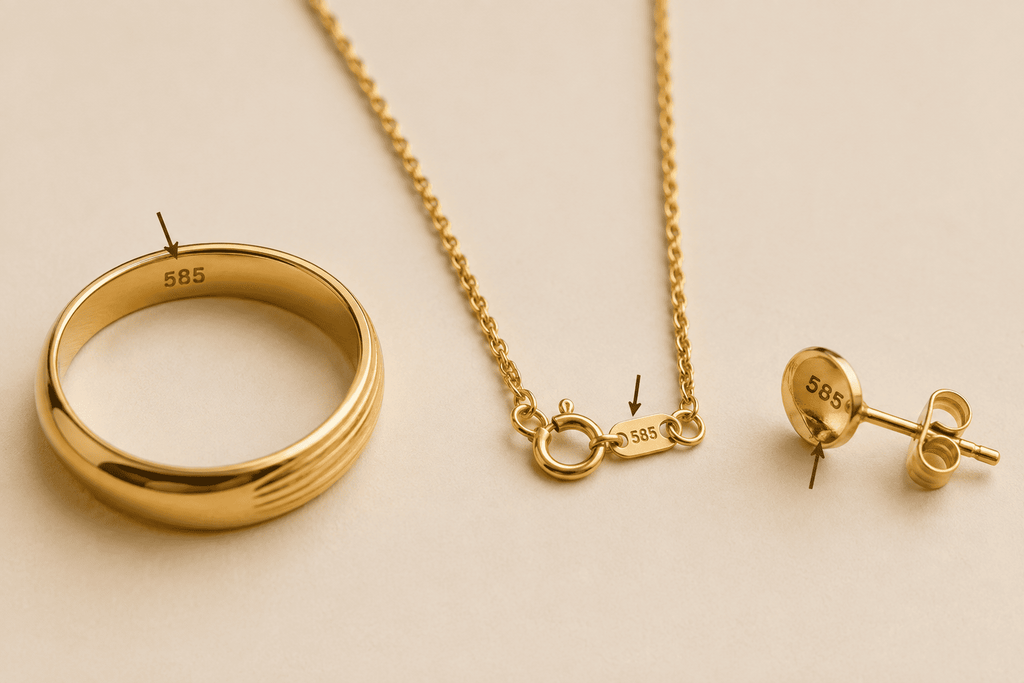
Check these spots first:
- Rings: the inside of the band
- Necklaces and bracelets: the clasp or a small tag near it
- Earrings: the post or the back
- Pendants and charms: the back or the bail
The stamps are small, so good light and a magnifier help. A phone camera on zoom works well if you don’t have a jeweler’s loupe. Reading the simple hallmarks starts with simply finding them, and that first look tells you whether the piece is marked at all.
Step 2: Read the Karat Number
Once you find the mark, the number is the key. Gold purity shows up in one of two systems, and both mean the same thing.
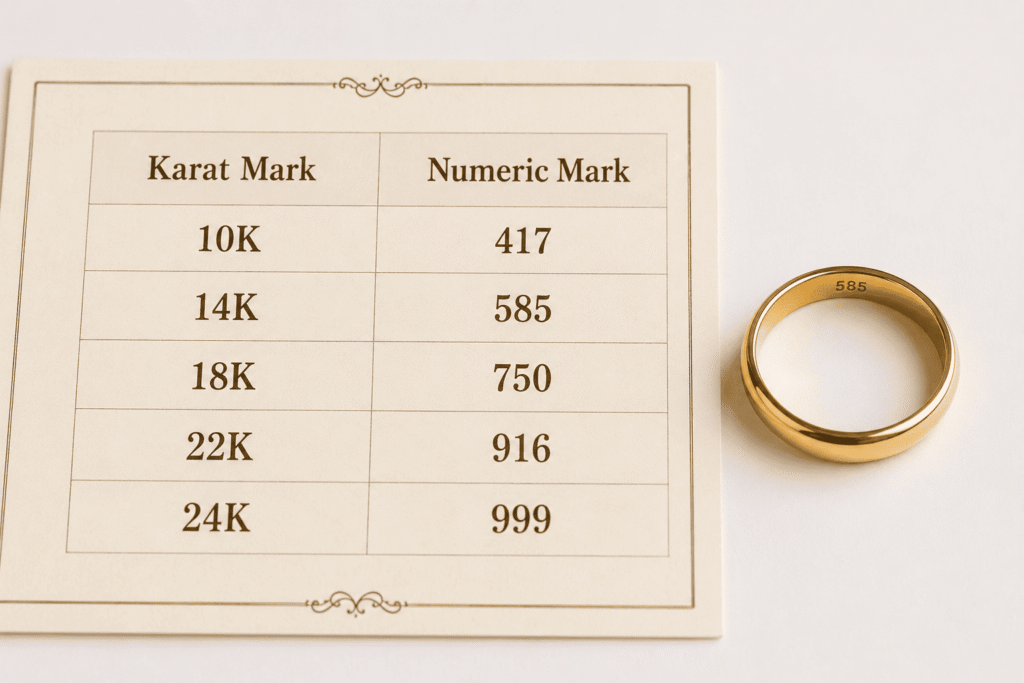
| Karat Mark | Numeric Mark | Gold Purity | Common Use |
| 10K | 417 | 41.7% | Budget rings, chains |
| 14K | 585 | 58.3% | Most US jewelry |
| 18K | 750 | 75.0% | Fine jewelry |
| 22K | 916 | 91.6% | Asian and Middle Eastern gold |
| 24K | 999 | 99.9% | Bars, some coins |
The higher the number, the more pure gold the piece contains, and the more it is worth per gram. A breakdown of gold purity marks explains why the same purity gets written two different ways.
Karat is a measure of parts out of 24. Pure gold is 24 karat, so 24 out of 24 parts is gold. 18K means 18 parts gold and 6 parts other metal, which works out to 75 percent. 14K means 14 parts gold, or 58.3 percent. The rest of the alloy is usually copper, silver, or zinc, added to make the gold harder and more durable for everyday wear.
You may also see three-digit European marks that match the same system. A 750 stamp and an 18K stamp mean exactly the same thing, just written for different markets. Once you connect the two systems, any gold mark becomes easy to read.
Step 3: Spot the Marks That Mean “Not Solid Gold”
This is the step that saves people money. Some stamps look like gold marks but actually tell you the piece is only coated.
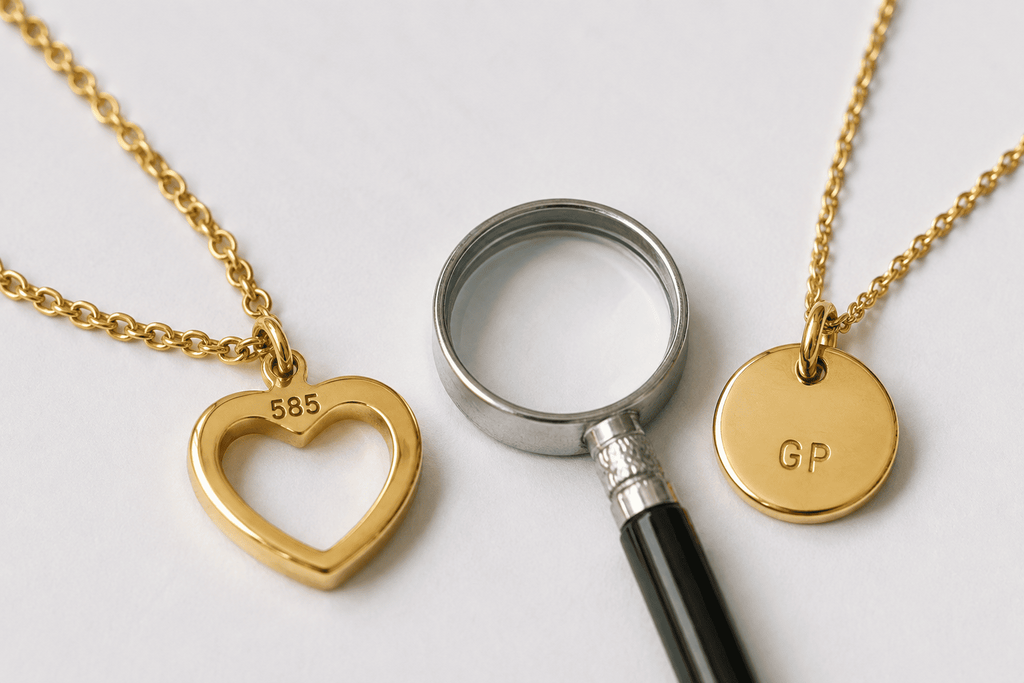
Watch for these letters:
- GP, GEP, HGE: gold plated, a thin layer over base metal
- GF or 1/20 14K GF: gold filled, more gold than plating but still not solid
- 925: sterling silver, not gold at all
Plated and filled pieces hold almost no melt value, no matter how much gold they appear to have. Knowing these simple hallmarks before you sell stops a buyer from paying you plated prices while you expected solid gold value. The way gold hallmarks are assigned follows industry standards that separate solid gold from coated pieces.
Step 4: Check for a Maker’s Mark or Country Stamp
Beyond the purity number, many pieces carry extra stamps. These do not change the gold content, but they add useful information.
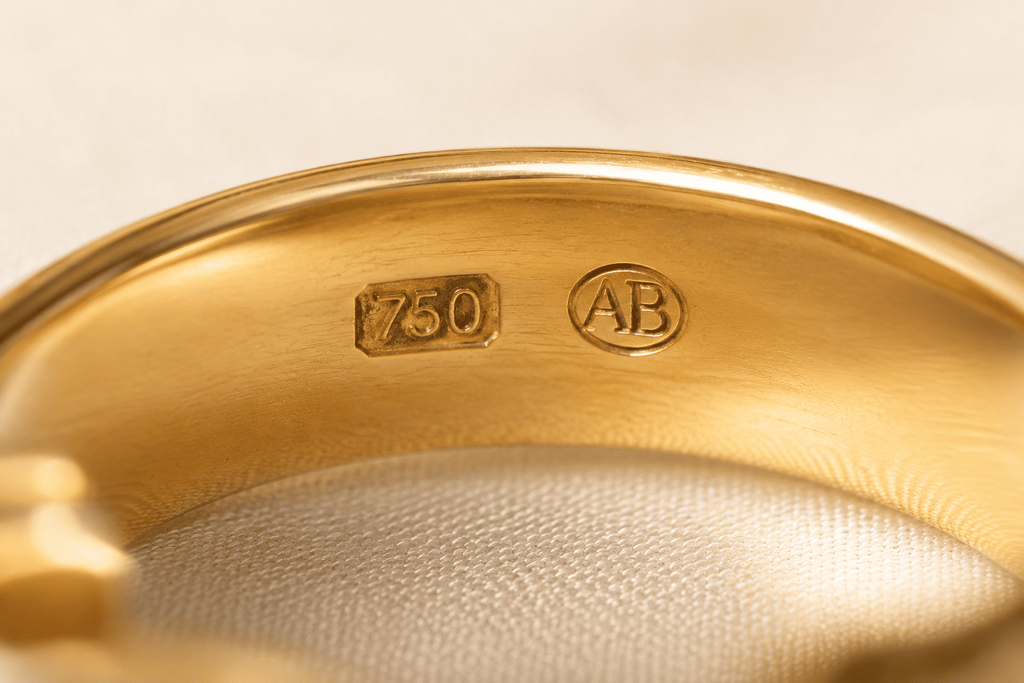
A maker’s mark identifies the manufacturer or designer, usually as initials or a small logo. Some pieces also carry a country-of-origin stamp or an assay office mark, common on older and imported jewelry. For a designer or antique piece, these marks can add value beyond the metal, so they are worth noting. A guide to reading gold jewelry markings at home covers the extra stamps you might run into.
Step 5: Confirm a Worn or Missing Mark
Older pieces sometimes have worn stamps, and a few genuine pieces were never marked at all. A missing mark does not automatically mean the gold is fake.

If you cannot read the simple hallmarks or find none, a jeweler can confirm the gold content with a quick acid test or an electronic scanner. Both are fast and one is non-destructive. In the US, karat stamp accuracy is backed by federal rules on karat marking, so a marked piece from a reputable maker is reliable. When the mark is gone, testing is the only sure answer.
Why Reading Hallmarks Matters Before You Sell
Knowing your karat before you sell changes the whole transaction. It lets you estimate value, sort mixed pieces, and judge whether an offer is fair.
Higher karat pays more per gram, so a 14K chain and an 18K ring should never be weighed together at the same rate. Reading the simple hallmarks yourself means you walk in already knowing roughly what you own. That knowledge ties directly into scrap gold pricing, where payout is based on purity and weight, and into a proper gold valuation, where each piece is tested and weighed against the current gold price.
It also helps you sort a mixed collection before selling. Grouping your pieces by karat, 10K with 10K and 18K with 18K, keeps the higher-purity items from being averaged down with the lower ones. A buyer who weighs everything together at the lowest karat present is underpaying you, and knowing your marks is what lets you catch it.
For older or foreign pieces with unfamiliar stamps, comparing them against a reference for how we value gold helps you understand what a fair offer looks like once the purity is confirmed.
Conclusion
The simple hallmarks stamped inside your jewelry hold the answer to what your gold is really worth. A karat number tells you the purity, a letter code warns you when a piece is only plated, and a maker’s mark can add value on the right piece.
Reading these marks takes a few minutes and puts you in control before any sale. Find the stamp, read the karat, watch for plated codes, and test anything unmarked. That short routine protects you from underselling and from surprises at the counter.
FAQs
Where do I find the hallmark on gold jewelry?
Check the inside of ring bands, the clasp on necklaces and bracelets, the post on earrings, and the back of pendants. The marks are small, so use good light and a magnifier or a phone camera on zoom. If you need help reading one, call Unique Jewelry at +1 (501) 859-1282.
What does 585 mean on gold jewelry?
585 means the piece is 14-karat gold, or 58.3 percent pure gold. It is the same as a 14K stamp, just written in the numeric system. 585 is the most common purity mark on jewelry sold in the US.
What do GP and GF mean on a gold stamp?
GP means gold plated, and GF means gold filled. Both indicate the piece is base metal with a gold coating or layer, not solid gold. These pieces hold little to no melt value. For a definite answer, a jeweler can test it or call +1 (501) 859-1282 to ask.
Is gold without a hallmark still real?
Sometimes. Older pieces can have worn stamps, and a few genuine pieces were never marked. A missing mark does not prove the gold is fake. An acid or electronic test confirms the content, and Unique Jewelry can check it for you at +1 (501) 859-1282.
Does a higher karat number mean more value?
Yes. A higher karat means more pure gold per gram, so an 18K piece is worth more per gram than a 14K piece of equal weight. This is why pieces of different karats should be weighed separately, not lumped together.