
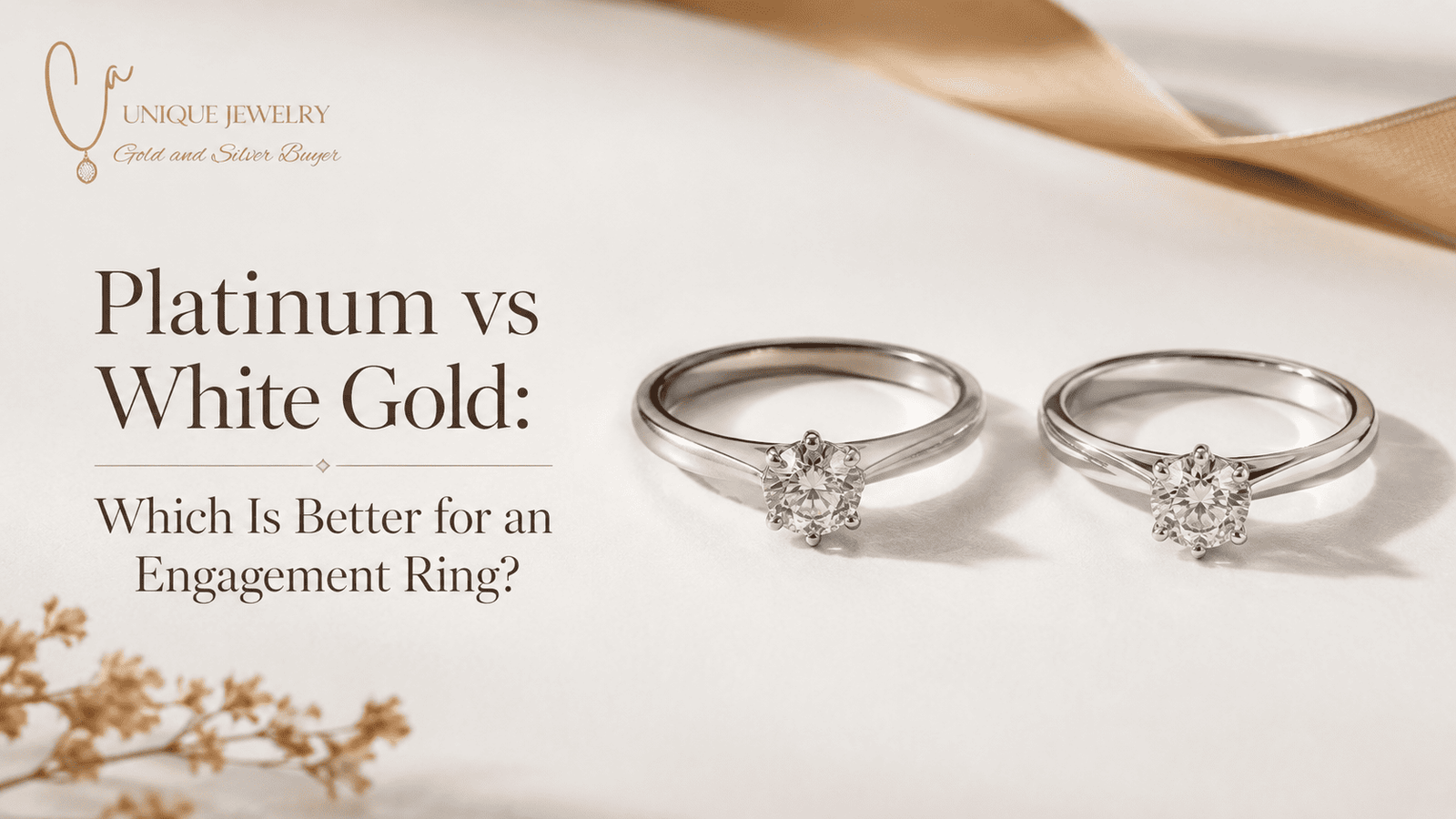
Platinum vs White Gold: Choosing the Right Metal for Your Ring
Platinum and white gold look almost identical on the finger. Both give you that bright, silvery-white setting that shows off a diamond beautifully. The difference is in what happens over the years, and in what you pay up front.
Most couples shopping for an engagement ring assume the choice is purely about looks. It isn’t. The two metals behave differently in durability, upkeep, cost, and how they wear against your skin, and those differences matter more the longer you wear the ring.
This guide breaks down platinum vs white gold across every factor that counts, so you can pick the metal that fits your hand, your budget, and your daily life.
Quick Summary
Platinum is denser, more durable, and naturally white, but costs more. White gold is lighter, more affordable, and just as beautiful, though it needs rhodium replating every few years to keep its shine. Both make excellent engagement rings; the right choice depends on budget and maintenance preference.
What Platinum and White Gold Actually Are
Before comparing them, it helps to know what each metal is made of, because that composition drives every other difference.
Platinum is a naturally white precious metal, used in jewelry at around 95 percent purity. It is dense, heavy, and white all the way through, so its color never fades.
White gold is not naturally white. It starts as yellow gold, then gets mixed with white metals like palladium or nickel, and finished with a thin rhodium plating that gives it that bright white finish. An overview of the types of jewelry metals explains how these alloys are built. You can see both options on the platinum and white gold pages.
Platinum vs White Gold: Side-by-Side Comparison
Laid out together, the trade-offs become clear at a glance.
| Factor | Platinum | White Gold |
| Natural color | White | Yellow, plated white |
| Purity | ~95% | 14K (58.3%) or 18K (75%) |
| Durability | Very high, dense | High, but softer |
| Maintenance | Minimal | Rhodium replating every 1 to 3 years |
| Weight | Heavier | Lighter |
| Cost | Higher | More affordable |
| Skin sensitivity | Hypoallergenic | May contain nickel |
Durability: How Each Metal Holds Up
For a ring worn every day, durability matters, and here the two metals differ in an interesting way.
Platinum is denser and more durable than white gold. It resists breaking and holds stones securely over decades. When platinum scratches, the metal is only displaced, not lost, so it keeps its mass over time.
White gold is harder on the surface but thinner in the setting. It can wear down slowly over many years, and prongs may need attention sooner. A detailed comparison of platinum and white gold covers how each metal ages under daily wear. Both are strong enough for an engagement ring; platinum simply has an edge in longevity.
If your daily routine is hard on your hands, through gardening, lifting, or hands-on work, platinum’s density gives you a bit more peace of mind. For a ring that mostly sees office and everyday wear, white gold holds up perfectly well with basic care.
Maintenance: The Rhodium Factor
This is the single biggest practical difference between the two metals, and the one most buyers don’t hear about until later.
White gold’s bright finish comes from rhodium plating, and that plating wears off. Every one to three years, a white gold ring needs to be replated to keep its white shine, otherwise a faint yellow tone shows through. The reason white gold needs rhodium plating comes down to its yellow-gold base.
Platinum needs no plating. It may develop a soft patina over time, which many people like, and a quick polish restores its shine. Over the life of the ring, platinum asks less of you in upkeep.
Cost: What You Pay and Why
Budget often decides this question, and the gap is real.
Platinum costs more than white gold for two reasons. It is denser, so a ring uses more metal by weight, and it is worked at higher purity. A platinum setting typically runs noticeably higher than the same design in white gold.
White gold gives you nearly the same look for less, which frees up budget for a larger or higher-quality diamond. For many couples, that trade-off is the deciding factor, and it is a completely reasonable one. If you want to compare the metal against a warmer option, the difference between white gold and yellow gold is worth a look before you commit.
Skin Sensitivity: Which Is Kinder to Your Hand
For anyone with sensitive skin, this factor can override all the others.
Platinum is hypoallergenic. Its high purity and lack of reactive alloys make it safe for almost everyone, including people who react to other metals.
White gold sometimes contains nickel, a common cause of skin irritation. Many modern white gold alloys use palladium instead, which is gentler, but if you have a known nickel allergy, it is worth confirming the alloy or leaning toward platinum. When choosing an engagement ring style, skin comfort is easy to overlook until the ring is on every day.
Resale and Long-Term Value
Both metals hold value, but they behave differently on the resale side.
Platinum carries a higher intrinsic metal value per gram and tends to retain worth well. White gold’s value rests on its gold content, which also holds up, though the rhodium finish adds nothing to resale. Either way, a quality ring in good condition retains value, and the diamond usually matters more than the metal when it comes to resale.
Down the line, if you ever update or reset the ring, the metal can often be reworked rather than replaced. Platinum in particular is easy to refinish and reshape without losing material, which gives it a long working life across resizing, repairs, and redesigns. A ring built well in either metal, with the option to add engraving for a personal touch, becomes a piece you can keep and adapt for decades.
Which Should You Choose?
The choice comes down to what you prioritize.
Choose platinum if you want maximum durability, a naturally white color that never needs plating, hypoallergenic comfort, and you have room in the budget for it.
Choose white gold if you want the same bright white look for less, you don’t mind occasional replating, and you’d rather put more of the budget toward the diamond.
There is no wrong answer. Both make beautiful, lasting engagement rings, and the right one is simply the one that fits your hand and your life.
Conclusion
Platinum and white gold both deliver that classic white setting couples love, and both will serve an engagement ring well for decades. Platinum wins on durability, natural color, and low maintenance, while white gold wins on price and flexibility, giving you the same look for less.
The best choice is the one that matches how you live. Think about your budget, your skin, and how much upkeep you’re willing to do, and the answer usually becomes clear.
If you’re planning a ring in central Arkansas, the team at Unique Jewelry can help you compare metals in person and design something built for your hand. Start a custom jewelry design or reach out through the contact page to begin the conversation.
FAQs
Is platinum or white gold better for an engagement ring?
Both are excellent. Platinum is more durable, naturally white, and hypoallergenic, but costs more. White gold offers the same look for less, though it needs rhodium replating every few years. The better choice depends on your budget and how much maintenance you prefer.
Does white gold turn yellow over time?
Yes, slightly. White gold has a yellow-gold base under its rhodium plating. As the plating wears, a faint yellow tone can show through, which is why white gold rings need replating every one to three years to stay bright white.
Is platinum worth the extra cost?
For many buyers, yes. Platinum lasts longer, never needs plating, and suits sensitive skin. If durability and low maintenance matter more to you than saving money up front, platinum earns its higher price.
Can white gold cause skin irritation?
It can, if the alloy contains nickel. Many modern white gold rings use palladium instead, which is gentler. If you have a nickel allergy, confirm the alloy or choose platinum, which is hypoallergenic.
How do I decide between platinum and white gold?
Weigh durability, maintenance, cost, and skin sensitivity against your priorities. If you want an in-person comparison or a custom design, call Unique Jewelry at +1 (501) 859-1282 to talk through the options.