Sterling Silver vs Silver-Plated: The Difference That Changes What It’s Worth
A drawer full of old silverware looks the same whether it’s worth fifty dollars or five hundred. The only way to know is to check what’s actually in it, sterling silver or silver plate, because the two are not close in value.
This mix-up costs people money constantly. Someone finds a set of old flatware, assumes it’s valuable because it’s heavy and tarnished the way real silver does, and either oversells it in their head or undersells it to a buyer who doesn’t bother explaining the difference. A few minutes of checking settles it either way.
Quick Summary:
Sterling silver is 92.5 percent pure silver and carries real melt value. Silver-plated items are base metal with a thin silver coating and are worth little as scrap. Check the hallmark, try a magnet, and look for wear at the edges to tell them apart before you sell.
What Sterling Silver Actually Is
Sterling silver is an alloy, not pure silver. It’s 92.5 percent silver mixed with 7.5 percent other metal, usually copper, which adds strength that pure silver lacks on its own.
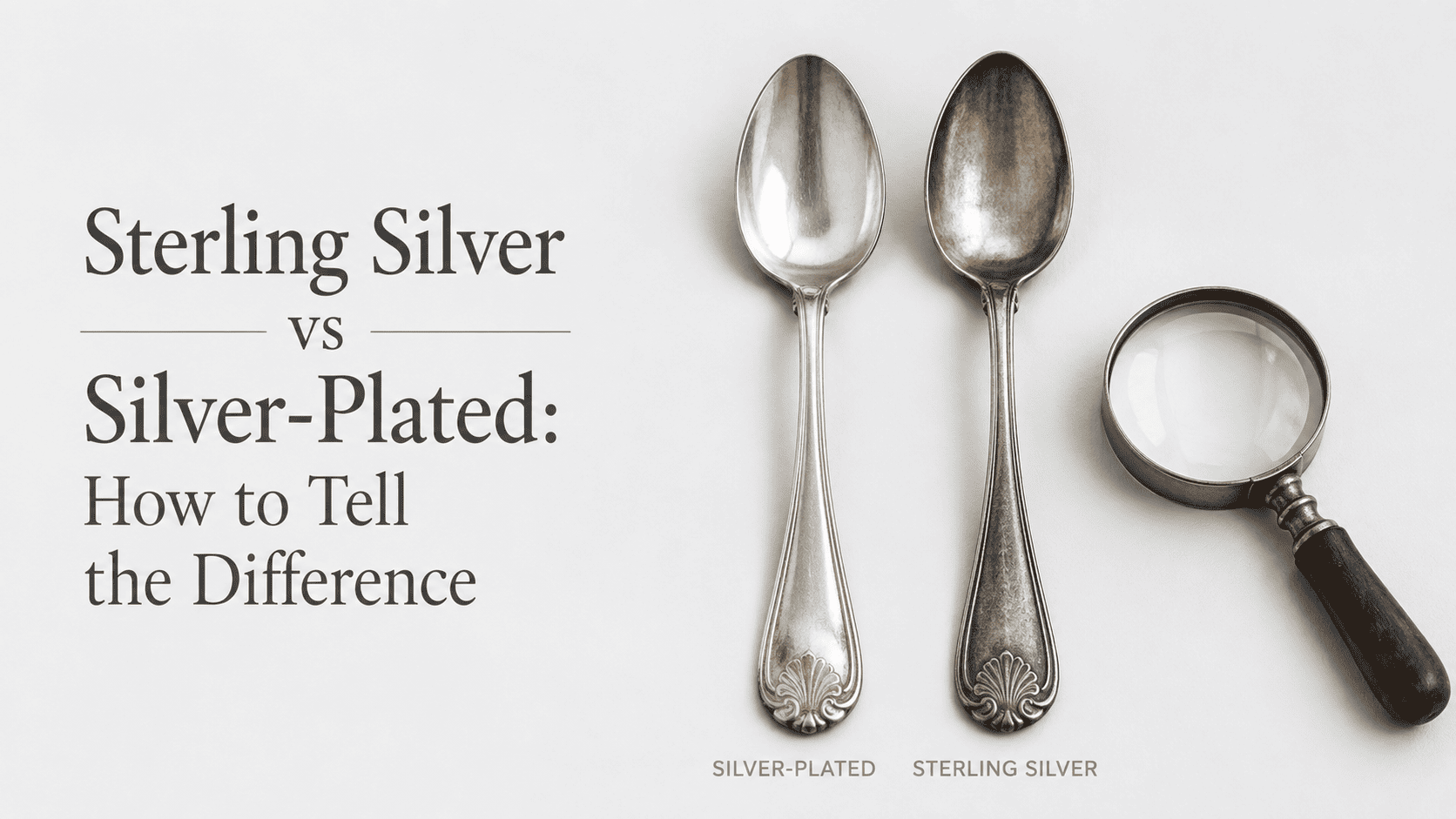
That 92.5 percent is what gives sterling real melt value. When silver spot price moves, sterling pieces move with it, the same way gold jewelry tracks gold spot. A sterling silver spoon and a silver-plated spoon can look nearly identical, but only one of them holds metal value once you scrap it or sell it by weight.
What Silver-Plated Actually Means
Silver plate is a base metal, often nickel, brass, or copper alloy, coated with a thin layer of real silver. The plating gives it a silver look and finish without the cost of solid silver underneath.
The silver layer on plated items is measured in microns, not grams of usable metal. Once that layer wears through, which happens with age and polishing, the base metal shows underneath. Silver-plated items have decorative and sometimes collector value, particularly for well-known makers or patterns, but they carry almost no melt value.
Sterling Silver vs. Silver-Plated: Side by Side
Laid out next to each other, the sterling silver vs. silver-plated gap becomes obvious once you know what to look for.
| Factor | Sterling Silver | Silver-Plated |
| Composition | 92.5% silver, 7.5% other metal | Base metal coated in a thin silver layer |
| Melt value | Real, tracks silver spot price | Minimal to none |
| Hallmark | “Sterling,” “925,” or “92.5” | “EPNS,” “Silverplate,” “Quadruple Plate” |
| Weight | Heavier for its size | Often lighter |
| Magnet response | Not magnetic | May attract if base metal is steel |
| Wear pattern | Ages evenly | Shows brassy or coppery wear spots |
| Best sold as | Scrap or antique silver | Decorative or collector item only |
How to Check the Hallmark
The hallmark is the fastest and most reliable check, and it’s the first thing to look for.
Turn the piece over and look on the underside, the back of flatware handles, or the base of hollowware like bowls and trays. Sterling pieces are stamped “Sterling,” “Sterling Silver,” “925,” or “92.5.” Any of these confirm the 92.5 percent alloy.
Plated pieces carry different marks entirely: “EPNS” (electroplated nickel silver), “Silverplate,” “Quadruple Plate,” “A1,” or a maker’s mark with no purity number at all. A guide to identifying old silverware and flatware sets walks through the most common stamps you’ll run into on inherited or estate pieces.
If a mark is worn away or you’re not confident reading it, that’s normal on older pieces, and a jeweler can confirm it in seconds with a simple test.
The Magnet Test
Silver, sterling or pure, is not magnetic. A strong magnet held against a piece tells you something useful in seconds.
If the piece pulls to the magnet, it is not solid sterling silver. Many silver-plated items use a steel or nickel base underneath the plating, and steel is magnetic. If nothing happens, that’s a good sign, though it doesn’t prove sterling on its own, since some plated pieces use non-magnetic base metals too. Practical at-home tests for real silver cover this alongside a few other quick checks.
The Weight and Wear Test
Sterling silver tends to feel heavier for its size than plated pieces, since solid metal weighs more than a coating over a lighter base.
Wear tells its own story. On sterling, age and polishing wear the surface evenly, since the metal is consistent all the way through. On plated pieces, wear at high-contact points, spoon bowls, fork tines, handle edges, eventually exposes the base metal underneath. That shows up as a brassy, coppery, or dull gray patch breaking through the silver finish. If you see that kind of patchy discoloration at the edges, you’re almost certainly holding plate.
The Tarnish Test
Both sterling and plated silver tarnish, so tarnish alone doesn’t tell you which one you have. But how it tarnishes offers a clue.
Sterling tarnishes evenly across the whole surface, since the silver content is uniform throughout. Plated pieces sometimes tarnish unevenly, especially near worn spots where the base metal is already showing. A set of simple at-home silver tests covers tarnish behavior alongside other checks worth trying together rather than alone.
Why the Difference Matters for Old Silverware and Flatware Sets
Inherited flatware sets are where this distinction matters most, because full sets can run into dozens of pieces and the value gap between sterling and plate is enormous.
A full sterling flatware service can weigh several pounds. At current silver spot price, that weight alone can be worth hundreds to over a thousand dollars in melt value. The same set in silver plate might be worth twenty or thirty dollars as scrap, though a desirable pattern from a known maker can carry collector value well above that, sold whole rather than melted.
This is why sorting matters before selling anything. A set that’s entirely plate might be worth more intact to a collector than in pieces. A set that’s sterling is worth checking against the current silver spot price before accepting any offer, since that price moves daily and sets your floor value.
What to Do Once You Know What You Have
Once sterling and plate are sorted, the path forward is different for each.
Sterling pieces without collector value sell as scrap based on weight and the silver spot price that day. We buy silver at Unique Jewelry covers testing and weighing for exactly this kind of piece, the same licensed process covered on the trusted pawn shop page. Sterling with a notable maker’s mark or pattern may be worth more sold intact, so it’s worth a second look before melting it down.
Silver-plated pieces rarely have scrap value, but well-known patterns, brands, or vintage pieces can still sell to collectors or decorators. Don’t assume plate is worthless, just know it’s not a metals sale.
For mixed collections that include gold alongside silver, the same sorting logic applies. Scrap gold works the same way, priced on weight and purity rather than appearance.
Conclusion
Sterling silver and silver plate can sit side by side in a drawer looking almost identical, and the only honest way to tell them apart is to check. The hallmark settles it most of the time. A magnet, a look at the weight, and a check of where the wear shows through cover the rest.
Getting this right before you sell protects you from two mistakes: melting down a valuable pattern that was worth more intact, or expecting real silver money for a set that’s mostly base metal with a thin coating. A few minutes of checking at home saves both.
If you’re in central Arkansas and want a set looked at properly, Unique Jewelry in Little Rock tests silver on the spot and can tell you what you’re actually holding. You can reach the shop at [PHONE PLACEHOLDER] to ask before you bring a collection in, or compare silver buyers near me in Little Rock if you want to check your options first.
Frequently Asked Questions
How can I tell if my silverware is sterling or plated at home?
Check the hallmark first. Sterling is stamped “Sterling,” “925,” or “92.5.” Plated pieces are marked “EPNS,” “Silverplate,” or similar. A magnet test helps too, since a piece that attracts to a magnet is not solid sterling.
Does silver-plated flatware have any resale value?
Rarely as scrap, since the silver layer is too thin to carry real melt value. Well-known patterns or brands can still sell to collectors or decorators, so it’s worth checking the maker’s mark before assuming a set is worthless.
How much is sterling silver worth compared to silver plate?
Sterling holds real value tied to the current silver spot price, often hundreds of dollars or more for a full flatware set. The same set in silver plate is usually worth only a small fraction of that, since it contains almost no actual silver.
Where can I sell sterling silver or check what I have?
A local precious metals buyer can test and weigh sterling silver on the spot using an acid test or hallmark check. Places that buy silver near you should test for free and explain the spot price they’re using before making an offer.
Does silver-plated jewelry or flatware tarnish the same way as sterling?
Both tarnish, but sterling tarnishes evenly across the whole piece since the silver content runs through it. Plated items sometimes tarnish unevenly, especially near worn spots where the base metal underneath is starting to show.