What Sets the Price of a Rare Coin Apart From a Bullion Coin
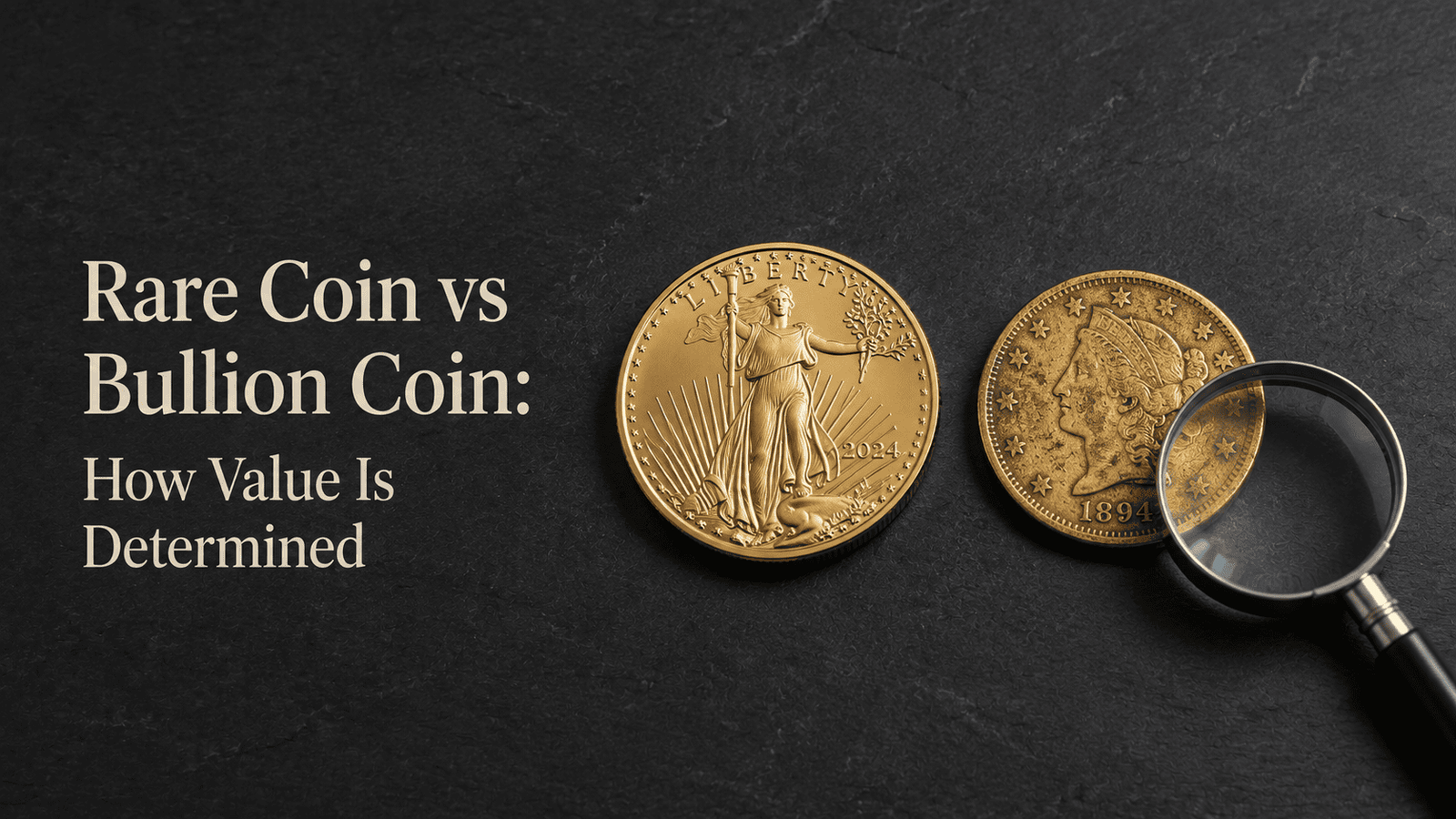
Two gold coins can weigh exactly the same and sell for wildly different prices. One trades for the value of its metal. The other sells for ten times that, or more. The reason comes down to which category the coin falls into, and knowing which one you hold is the difference between a smart sale and a costly mistake.
People mix these up all the time. They inherit a coin, see that it’s gold, and assume the gold content is the whole story. Sometimes it is. Sometimes the coin is worth far more because of what it is, not what it’s made of. This guide breaks down exactly how value gets set on each side, so you know what you’re holding before you sell it.
Quick Summary:
Bullion coins are valued mainly for their metal content, while rare coins are worth more because of scarcity, condition, and history. Knowing the rare coin vs. bullion coin difference can help you avoid selling a rare coin for its melt value. Sell bullion to a metals buyer and rare coins to a numismatic specialist.
What a Bullion Coin Actually Is
A bullion coin exists for one reason: to hold precious metal in a convenient, recognizable form. Its value tracks the metal inside it, plus a small premium.
When you buy a one-ounce gold American Eagle or a Krugerrand, you’re buying gold. The government mints stamps for it, guarantees the weight and purity, and issues it in large numbers. Millions exist. Rarity plays almost no role.
Bullion coins trade at the spot price of their metal plus a premium of a few percent that covers minting and distribution. When gold goes up, your bullion coin goes up with it. When gold drops, so does the coin. The metal is the whole story. Government mints describe how bullion and collector coins are issued through their official programs.
Common bullion coins:
- American Gold and Silver Eagles
- Canadian Gold and Silver Maple Leafs
- South African Krugerrands
- Austrian Philharmonics
- Chinese Pandas
What a Rare Coin Actually is
A rare coin carries value beyond its metal because of scarcity, history, and condition. This extra value is called numismatic value, and it can be the majority of the coin’s worth.
Take a gold coin from the 1800s with a low mintage. Its gold content might be worth a few hundred dollars. To a collector, the coin itself could be worth thousands, because few exist and fewer survive in good shape. The metal becomes almost a footnote. A breakdown of what makes a coin numismatic covers how dealers separate collectible pieces from plain metal.
A rare coin’s price answers to a different market. It moves on collector demand, auction results, and how many similar coins are known to exist. The spot price of gold barely touches it. This is the core of the distinction: one asset follows metal prices, the other follows a collector market.
The 5 Factors That Set Coin Value
Every coin’s worth comes from some mix of these five things. Bullion coins lean almost entirely on the first. Rare coins draw from all five.
1. Metal content. The weight and purity of the gold or silver inside. This sets the floor for any coin. A coin is never worth less than its melt value.
2. Rarity. How many were made, and how many survive? Low mintage and high attrition push numismatic value up. A coin with millions in circulation has little rarity premium.
3. Condition (grade). The physical state of the coin, scored on a 1 to 70 scale. For rare coins, a few grade points can multiply the price. Professional grading standards are documented in the field of coin grading.
4. Demand. How badly collectors want it right now. Popular series and historically significant coins command more. Demand shifts over time, unlike metal weight.
5. The spread. The gap between what a buyer pays and what they sell for. This one is invisible on a price tag but real in your pocket. Rare coins often carry wider spreads than bullion, which affects your actual return.
That last factor is the one most articles skip, and it matters. A rare coin can appreciate on paper, while a wide buy-sell spread eats much of your gain when you finally sell. Bullion spreads are tight and predictable. Rare coin spreads vary by dealer and by piece.
Rare Coin vs Bullion Coin: Side by Side
| Factor | Bullion Coin | Rare Coin |
| Value driver | Metal content | Rarity, condition, history |
| Price tracks | Daily spot price | Collector demand |
| Premium over melt | Small, 2 to 8% | Large, sometimes 100x |
| Rarity matters? | No | Yes, heavily |
| Condition matters? | Barely | Enormously |
| Buy-sell spread | Tight | Wider, varies |
| Liquidity | High, sells fast | Slower, needs right buyer |
| Best for | Metal investors | Collectors |
For anyone holding a mix, sorting gold coins into these two groups is the first real step before selling.
Which One Fits You: Investor or Collector
The choice usually comes down to why you’re buying in the first place.
Choose bullion if you want metal exposure. You’re betting on gold or silver prices. You want something liquid you can sell fast at a predictable price. You don’t want to become an expert in dates and grades. Bullion is the straightforward path, and it pairs well with a broader plan to invest in gold.
Choose rare coins if you want to collect. You enjoy the history, the hunt, and the craft. You’re willing to study or work with a trusted dealer, and you accept slower liquidity in exchange for the chance at outsized appreciation on the right piece. A comparison of numismatic versus bullion coins as investments lays out the trade-offs in detail.
Plenty of people own both. Bullion for the metal position, a few collectible pieces for interest. There’s no rule against mixing.
Price Behavior: What Moves Each
Bullion and rare coins react to completely different forces, and knowing this helps you time a sale.
Bullion moves with the metal market. Gold spikes during uncertainty, inflation fears, and currency weakness. When you watch the spot price, you’re watching your bullion’s value in real time. It’s transparent and fast. Understanding what makes gold valuable tells you most of what drives a bullion coin.
Rare coins move slower and on their own schedule. A coin’s value can climb for years while metal prices stay flat, driven by a surge in collector interest or a record auction result for a similar piece. It can also stall if a series falls out of fashion. The metal market is almost background noise to a serious rare coin.
This difference matters when you sell. Bullion, you sell when the metal price suits you. A rare coin, you sell when you find a buyer who recognizes its numismatic worth, which isn’t every buyer.
Selling Rare or Bullion Coins in Little Rock
Where you sell shapes what you get, and the right buyer depends on which type you hold.
For bullion, any fair precious metals buyer works. You want someone paying a solid percentage of live spot with a tight spread. The coin’s collector value isn’t the point, so you’re shopping on metal price. Sellers across Little Rock, North Little Rock, Sherwood, and Maumelle can compare bullion offers quickly since the pricing is transparent.
For rare coins, you need a buyer who knows numismatics. A generic buyer might offer you melt value on a coin worth ten times that, simply because they can’t see the premium. This is where sellers lose the most. Collectors in Little Rock, Conway, Benton, and Bryant should look for a buyer who can grade and price collectible coins properly, not just weigh them. Comparing options for selling gold and silver for cash in Little Rock helps you find a buyer who handles both.
The safe move with any coin you suspect is rare: get it looked at by someone who knows collectible coins before you accept a metal-only offer.
Conclusion
The rare coin vs bullion coin question isn’t really about which is better. It’s about knowing what you’re holding and matching it to the right buyer. Bullion is metal in coin form, priced on spot and easy to sell fast. A rare coin is a collectible whose worth comes from scarcity and condition, and it needs a buyer who can see that.
The costliest mistake is treating a rare coin like bullion. Sell a scarce, high-grade piece for its melt value and you hand a stranger the difference. A few minutes of checking, or one honest opinion from a numismatic buyer, protects you from that.
If you’re in central Arkansas and want to know whether a coin is rare or just metal, the team at Unique Jewelry in Little Rock handles both bullion and collectible coins. You can reach them at +1 (501) 859-1282 to ask about a specific coin, or start by comparing local coin buyers near me in the area.
FAQs
What is the main difference between a rare coin and a bullion coin?
A bullion coin’s value comes from its metal content and tracks the daily spot price. A rare coin’s value comes from scarcity, condition, and history, which can push its price far above the metal. Bullion is bought for metal exposure; rare coins are bought to collect.
Which is a better investment, bullion or rare coins?
Neither is universally better. Bullion offers liquid, transparent metal exposure with tight spreads. Rare coins offer the chance at larger gains but need expertise, sell slower, and carry wider spreads. Bullion suits hands-off metal investors; rare coins suit knowledgeable collectors.
Do rare coins hold value better than bullion?
Sometimes. A quality rare coin can appreciate on collector demand even when metal prices are flat. But that value depends on finding a buyer who recognizes it, and wider spreads can eat returns. Bullion’s value is steadier and easier to cash out at a predictable price.
How do I know if my coin is rare or just bullion?
Check the mintage year, mint mark, and whether it’s a standard bullion issue like an Eagle or Krugerrand. Modern bullion coins made in the millions are rarely collectible. Old, low-mintage, or unusual coins may carry numismatic value and should be checked by a specialist before selling.
Where can I sell rare or bullion coins near me in Little Rock?
Look for a buyer who handles both types and can tell them apart. Bullion sells to any fair metals buyer at a share of spot. Rare coins need a numismatic specialist who can grade and price the premium. Sellers in Little Rock, North Little Rock, Conway, and Benton should confirm a buyer can value collectible coins, not just weigh them.