What Every Collector Should Know Before Selling Gold and Silver Coins
Coins are trickier to sell than scrap jewelry. A gold chain is worth its metal and little else. A coin can be worth its metal, or many times that, depending on what it is. Sell it as scrap when it carries collector value, and you leave real money on the table.
The gap between a coin’s melt value and its collector value is where sellers get it wrong. Selling gold and silver coins well starts with knowing which of your coins are ordinary metal and which are worth more because of what they are. This guide walks through how coins are valued, how to tell bullion from rare pieces, and what to check before you sell a single one.
Two Kinds of Value: Metal vs. Collector
Every coin has two possible values, and the higher one wins.
Melt value is the worth of the metal inside the coin. A one-ounce gold coin contains a set amount of gold, and that gold has a market price that day. Melt value is the floor.
Collector value, also called numismatic value, is what a collector will pay above the metal because the coin is rare, old, in fine condition, or historically notable. Not every coin has it. When it exists, it can dwarf the metal value.
A common one-ounce silver coin might be worth its silver and nothing more. A rare date of the same coin in excellent condition could sell for many times that. Same metal, wildly different price. This is why coins are never a simple weigh-and-pay job the way scrap gold is. A look at the world’s most valuable collectors coins shows how far collector value can run past melt.
Rare Coin vs. Bullion Coin: Know the Difference
Sorting your coins into these two buckets is the single most useful thing you can do before selling.
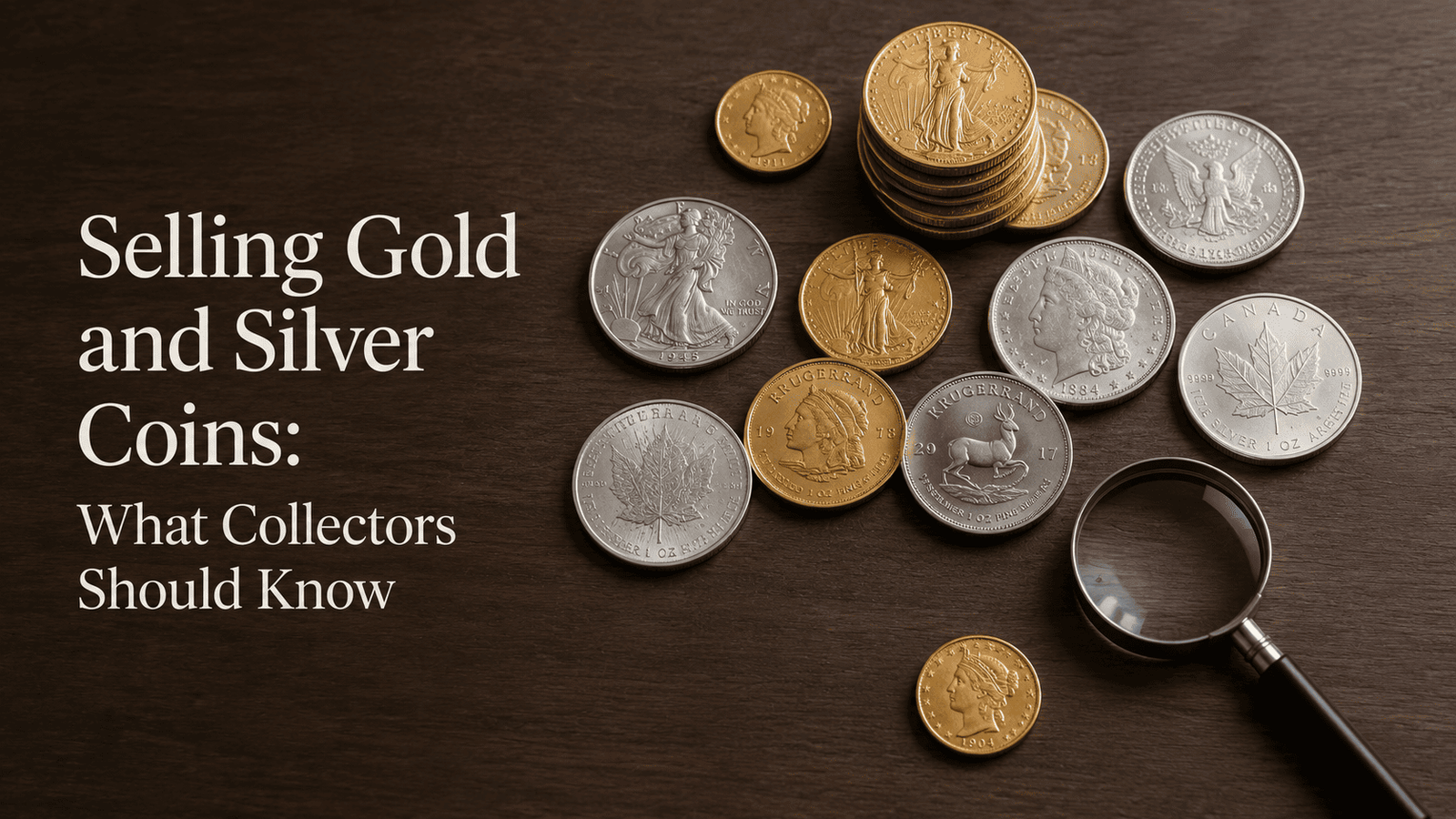
Bullion coins are made to hold metal value. Think American Gold Eagles, Silver Eagles, Canadian Maple Leafs, and Krugerrands. People buy them to own gold or silver, not to collect. They trade close to melt value, with a small premium. Government-issued pieces like gold American Eagles and gold Krugerrands are the classic examples.
Rare or collectible coins carry value beyond the metal. Age, mintage numbers, errors, condition, and history all feed into it. A worn common coin has little numismatic value. A scarce date in sharp condition can be worth a fortune to the right buyer.
| Feature | Bullion Coin | Rare / Collectible Coin |
| Main value driver | Metal content | Rarity, condition, history |
| Price vs. melt | At or just above | Often well above |
| Examples | Eagles, Maple Leafs, Krugerrands | Key-date coins, errors, antiques |
| Best sold to | Bullion or metal buyer | Numismatic specialist |
| Condition matters? | Barely | Enormously |
A useful primer on what determines a coin’s value breaks down how these factors stack up in practice.
How Coins Are Graded
For collectible coins, condition is everything, and the industry measures it on a standard scale.
Coins are graded on the Sheldon scale, running from 1 (barely identifiable) to 70 (flawless). A jump of a few points can multiply a coin’s value, especially near the top of the scale. A coin graded 63 and the same coin graded 66 can carry very different prices.
Two services dominate professional grading: PCGS and NGC. A coin they have graded and sealed in a protective holder, called being “slabbed,” sells with far more confidence because the grade is certified. The coin grading scale explains what each grade means and why the difference matters.
You do not need every coin graded. It costs money and makes sense only when a coin is valuable enough that a certified grade adds more than the grading fee. For common bullion and low-value coins, grading is not worth it.
What Not to Do: Cleaning Coins
This one is simple and important. Do not clean your coins.
It feels natural to want a coin to look shiny before selling. But to a collector, cleaning destroys value. A cleaned coin loses its original surface, and experienced buyers spot it instantly. A coin worth hundreds can drop sharply once it has been polished or scrubbed.
Toning and patina, the color a coin develops over decades, is often desirable, not a flaw. Leave your coins exactly as they are. If they are dusty, that is fine. The buyer would rather see the real surface than a damaged one.
How to Prepare Before You Sell
A little organization gives you the upper hand and protects your better pieces.
- Sort bullion from collectibles. Keep common metal coins separate from anything old, unusual, or foreign.
- Do not clean anything. Worth repeating, because it is the most common costly mistake.
- Note metal and weight. For bullion, the metal content sets the baseline. Gold and silver bullion each track their own spot price.
- Photograph valuable pieces. Front and back, in good light, for your records and for getting remote opinions.
- Gather any paperwork. Original packaging, certificates, or purchase records help with provenance.
- Research key dates. A quick lookup of a coin’s year and mint mark tells you if it is a common issue or a scarce one.
For collectors starting out, a coin collecting guide for beginners covers how dates and mint marks affect value.
For coins tied to precious metal prices, understanding why gold and silver hold value helps you read the bullion side of the market.
Selling a Coin Collection You Inherited
Inherited collections are common, and they come with a specific challenge: you often have no idea what you are holding.
Resist the urge to dump the whole thing at once. Mixed collections frequently hide a few valuable pieces among many common ones. A buyer purchasing the lot as bulk has no reason to point out the gems.
Start by separating obvious bullion from everything else. Then get the unusual, old, or foreign pieces looked at individually. If the collection is large or you suspect real value, an appraisal before selling is worth the cost. Beginner-friendly grounding from a guide to coin collecting helps you speak the language before you sit down with a buyer.
The key with any inherited group is patience. Selling gold and silver coins from a collection rewards the person who sorts first and sells second.
Finding the Right Buyer
Where you sell shapes what you get. The buyer who is right for bullion is often wrong for rare coins, and the reverse.
For bullion, a precious metals buyer who pays a fair percentage of live spot is what you want. The coin’s collector value barely matters, so you are shopping on metal price and margin. For rare and collectible coins, you want a numismatic specialist who can recognize and price the premium a bullion buyer would ignore.
Some buyers handle both. What matters is that they can tell the difference and price each coin on its real strength. A buyer who offers you flat melt value on a rare key-date coin is not the right buyer for that piece. Sorting your coins first, as covered above, lets you match each one to the buyer who pays it best. Sellers looking at where to sell gold and silver for cash in Little Rock can compare local options this way.
Key Takeaways
- Every coin has a melt value and a possible collector value. The higher one sets the price, so never assume a coin is worth only its metal.
- Bullion coins trade near melt. Rare and collectible coins can sell far above it based on rarity, condition, and history.
- Grade drives collectible value. PCGS and NGC certification adds confidence, but only grade coins valuable enough to justify the fee.
- Never clean coins. Cleaning strips original surface and can gut a collectible coin’s value in seconds.
- Sort bullion from collectibles before selling, and have unusual or inherited pieces judged individually.
- Match the coin to the buyer. Bullion goes to a metal buyer, rare coins to a numismatic specialist.
Conclusion
Selling gold and silver coins rewards the person who slows down. The single biggest mistake is treating every coin as scrap metal, when some of them carry value far beyond their weight. Sort your bullion from your collectibles, leave the surfaces untouched, and find out what you actually own before anyone makes an offer.
The buyer matters as much as the prep. Bullion belongs with a metal buyer who pays a fair share of spot, while rare coins deserve a specialist who can see the premium. Matching each coin to the right buyer is how you avoid selling a key-date rarity for the price of its silver.
If you are in central Arkansas and weighing where to sell, Unique Jewelry at Park Plaza handles both bullion and collectible coins and can walk you through the difference. You can reach the shop at +1 501-859-1282 to ask about a specific coin before you visit.
Frequently Asked Questions
Are coins valued by weight or by rarity?
Both, depending on the coin. Bullion coins are valued mostly by weight and metal content. Collectible coins are valued by rarity, condition, and history, which can push their price well above the metal. The higher of the two values is what a fair buyer pays.
Do buyers pay a premium for collectible coins?
Yes, when the coin earns it. A scarce date, a minting error, a high grade, or historical significance all command prices above melt value. A common coin in worn condition usually does not sell close to its metal worth.
What is the difference between a rare coin and a bullion coin?
A bullion coin is made to hold metal value and trades near the price of its gold or silver. A rare coin carries value beyond the metal because of scarcity, condition, or history. Bullion is bought to own precious metal; rare coins are bought to collect.
Should I clean my coins before selling them?
No. Cleaning removes the original surface and lowers value, sometimes drastically. Collectors and dealers can spot a cleaned coin immediately. Leave any patina or toning intact and present the coin exactly as it is.
How do I sell an inherited coin collection?
Sort bullion from collectibles first, and do not sell the whole lot as bulk before checking for valuable pieces. Have old, foreign, or unusual coins looked at individually. For a large collection, a professional appraisal before selling protects you from underselling hidden gems.
Do I need coins graded before selling?
Only for coins valuable enough that a certified grade adds more than the grading fee. Professional grading from PCGS or NGC boosts buyer confidence on high-value pieces. Common bullion and low-value coins do not need it.